Styling Experience Optimization
Optimized Dia's personal styling experience to improve engagement and retention by introducing more flexible plans, clarifying value, and simplifying plan management across the customer lifecycle.
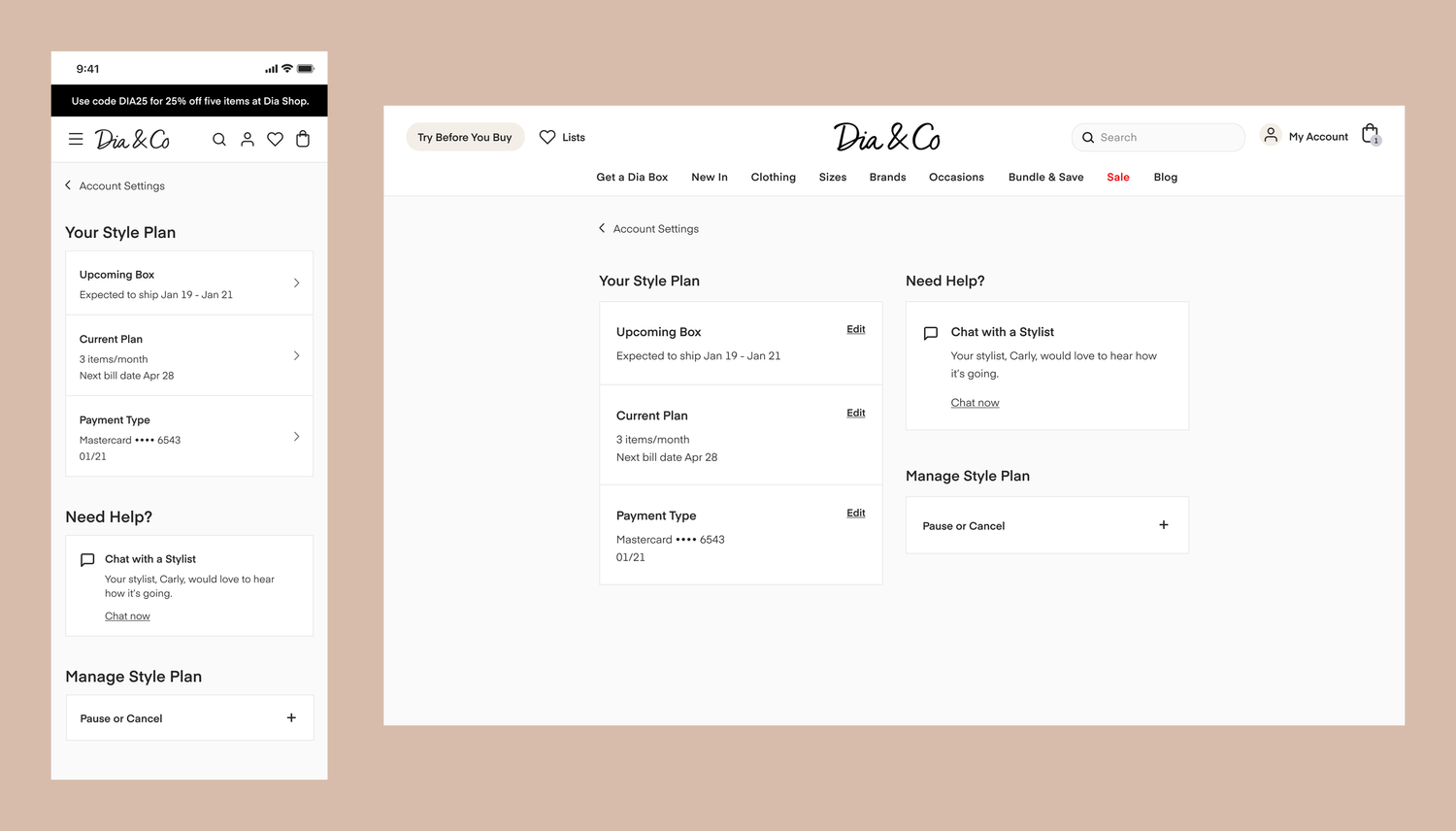
Overview
Dia & Co's personal styling segment was underperforming. Existing frequency-based plans felt like a big financial commitment upfront, making it difficult for both new and existing customers to see the value and commit long-term. The business needed a plan redesign that could serve two distinct audiences simultaneously: new customers evaluating Dia for the first time, and existing customers who needed a compelling reason to switch to a new plan model.
Goal: Increase plan conversion and retention by shifting to an item-based model with clearer value and a more flexible customer lifecycle.
Approach
- A/B testing surfaced key findings: frequency-based annual plans felt like too large an upfront commitment, billing language created confusion, customers valued the ability to switch plans anytime, and number of items per month resonated more than number of outfits. These insights directly drove the shift to Style Plan 2.0
- Mapped user flows for both new and existing customers to design for the full lifecycle, including onboarding, plan switching, pausing, cancellation, and abandonment
- Simplified information architecture and plan comparison to reduce decision fatigue
- Collaborated with product, engineering, and brand to align on feasibility, language, and messaging consistency
Solution
Flexible, Item-Based Plans
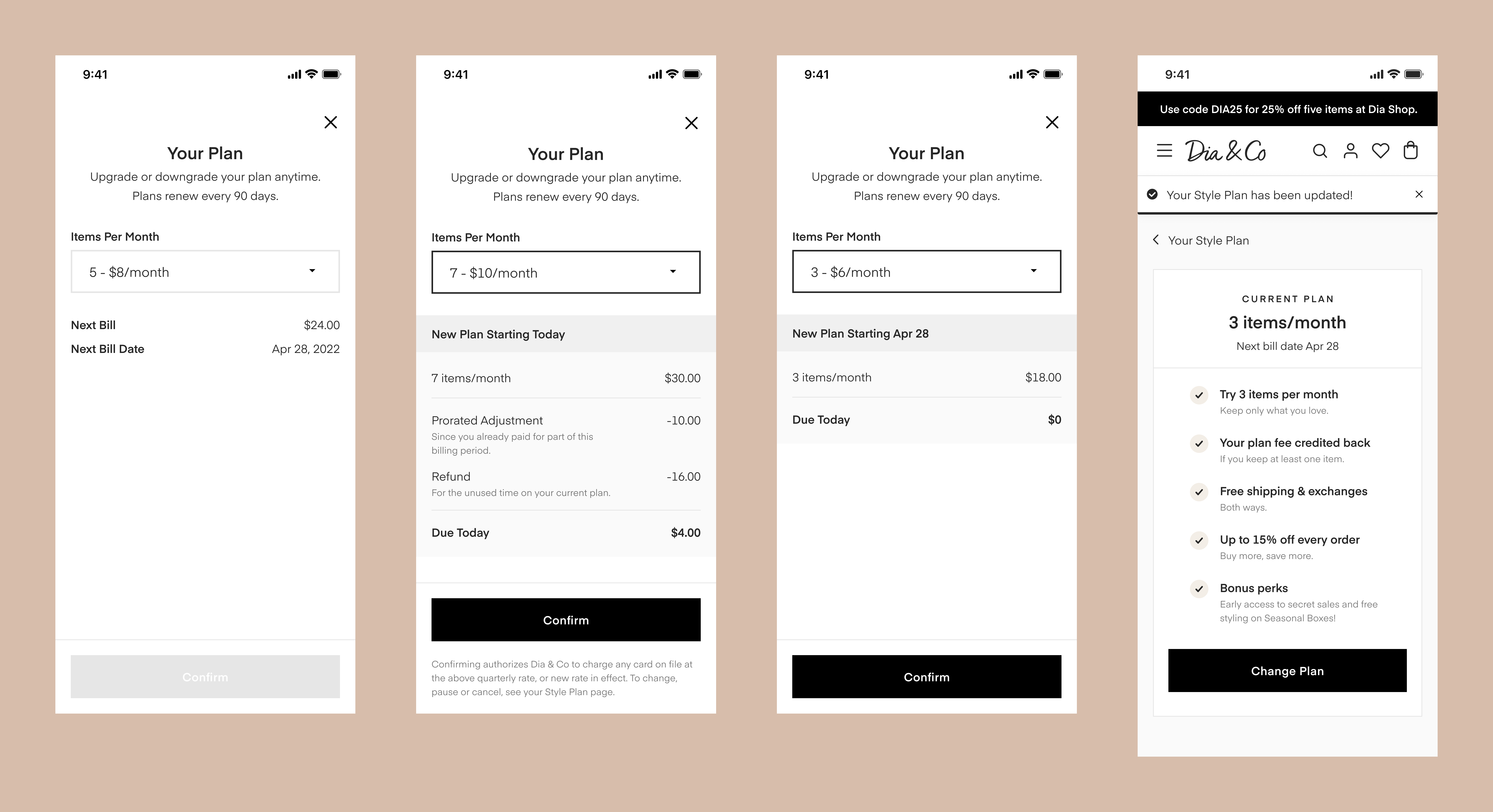
Shifted from rigid frequency-based plans to flexible, item-based options that better matched user behavior and reduced commitment anxiety.
Clearer Value & Plan Comparison
Simplified plan selection and rewrote the supporting copy to clarify pricing, benefits, and the distinction between plan tiers. UX copywriting was a core part of this work, with the language itself serving as a conversion lever alongside layout and IA decisions.
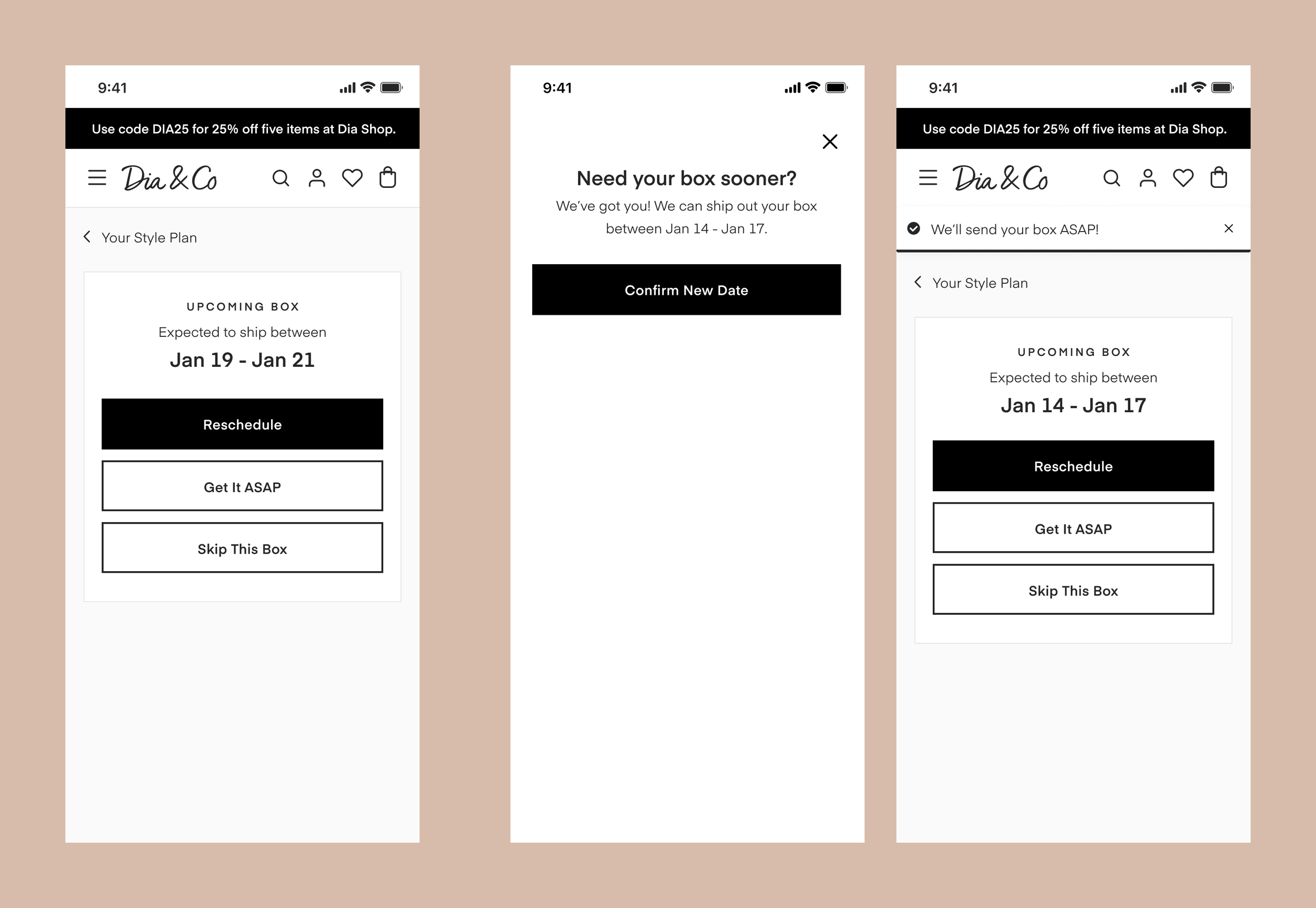
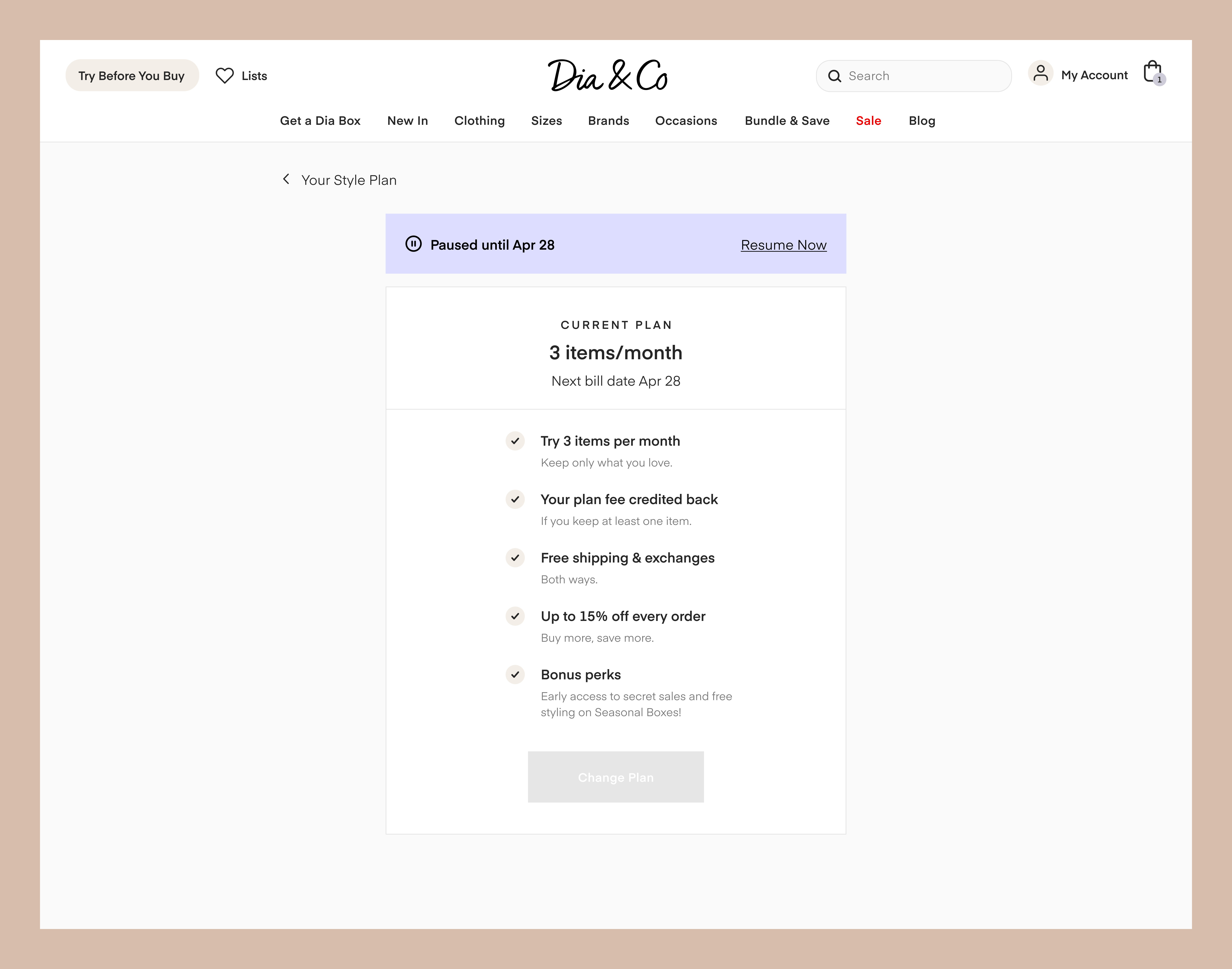
Improved Plan Management
Designed plan management flows covering every state a customer could reach in their subscription lifecycle: plan changes, upcoming box management, pausing, and cancellation. Loss aversion interventions were built into key drop-off points, presenting targeted offers like styling fee waivers and pause options to reduce churn before cancellation.
.png)
Lifecycle Support
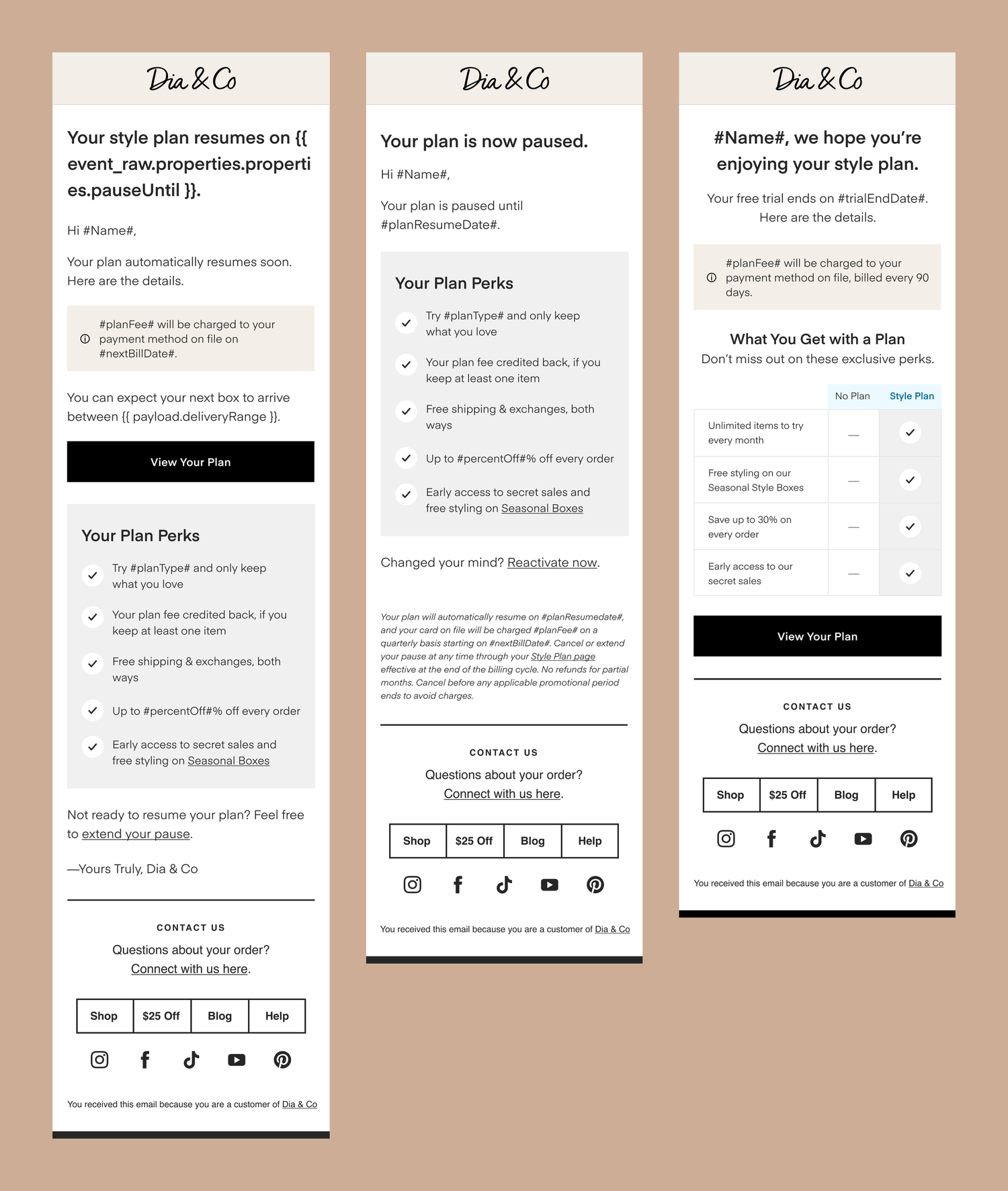
Designed transactional emails to support key moments in the subscription lifecycle, including plan changes, pauses, free trial endings, and re-engagement, ensuring the experience held up beyond the initial plan selection.
Impact
- Delivered end-to-end design across the full customer lifecycle, from plan selection through plan management, pausing, cancellation, and transactional communication
- A/B testing confirmed that item-based plan framing outperformed frequency-based plans, directly validating the core structural change in Style Plan 2.0
- Project concluded before launch, so post-release metrics weren't available. The work was validated through cross-functional stakeholder review and positioned for measurement once live
Reflection
The biggest challenge was designing for two customer groups with different mental models. New customers needed to be convinced of the value, while existing customers needed to see a clear reason to switch without feeling disrupted. Navigating that tension while aligning stakeholders across product, brand, and engineering was where the real design work happened. It reinforced for me that the details matter as much as the system: language, hierarchy, and visual consistency were all levers in whether a customer stayed or left.